 Skip to content


7 Smart Ways to Find Influencers for Your Campaign
Finding the right influencers is one of the most underestimated steps in a campaign. Picking the wrong creator can sink an otherwise well-planned budget, while picking the right one often makes the difference between content that performs and content that gets scrolled past. The good news: there are plenty of practical ways to find creators that match your brand, audience, and objectives, without relying on a single tool or method.
This blog walks through seven smart and proven ways to discover the right creators for your next campaign.
Seven ways to find the right influencers
1. Use influencer marketing tools
Influencer discovery tools let you search creators based on audience demographics, engagement rates, niche, and other criteria. They are useful when you want to scan a large pool quickly.
Two things to keep in mind. First, the audience data on these platforms is often scraped or estimated by AI, so it is not always accurate. Always cross-check what a tool tells you against the creator’s actual content and engagement. Second, most discovery tools focus only on finding creators. The actual collaboration, briefing, and campaign management happen elsewhere, and that part is usually where most of the work sits.
2. Use the native creator marketplaces of social platforms
Several social platforms have built their own official creator marketplaces, including the TikTok Creator Marketplace, the Meta Creator Marketplace, and YouTube Creator Partnerships (formerly known as YouTube BrandConnect). The big advantage is that the audience and performance data on these platforms comes straight from the platforms themselves, which makes it far more accurate than what third-party tools can estimate.
One important caveat: none of these marketplaces are currently available in Belgium. If you are running campaigns from Belgium, this method is not yet a practical option unless you operate through an entity in a country where one of these marketplaces is live. Worth keeping an eye on though, since coverage tends to expand over time.
3. Work with an agency
If you want a more hands-off approach, working with an influencer marketing agency saves you the time it takes to discover, vet, and onboard creators yourself. Agencies typically have existing relationships with creators, which means faster onboarding and often better rates. They also handle the parts that take the most time: contracts, briefings, content reviews, and reporting.
This option works best when you run regular campaigns, when you want to scale paid amplification on top of organic content, or when your team simply does not have the bandwidth for the full process.
4. Use hashtags on social media
For brands that prefer a more hands-on approach, hashtag search remains one of the simplest and most effective ways to discover creators. Search hashtags that match your industry, product category, or campaign theme, then explore the profiles that show up.
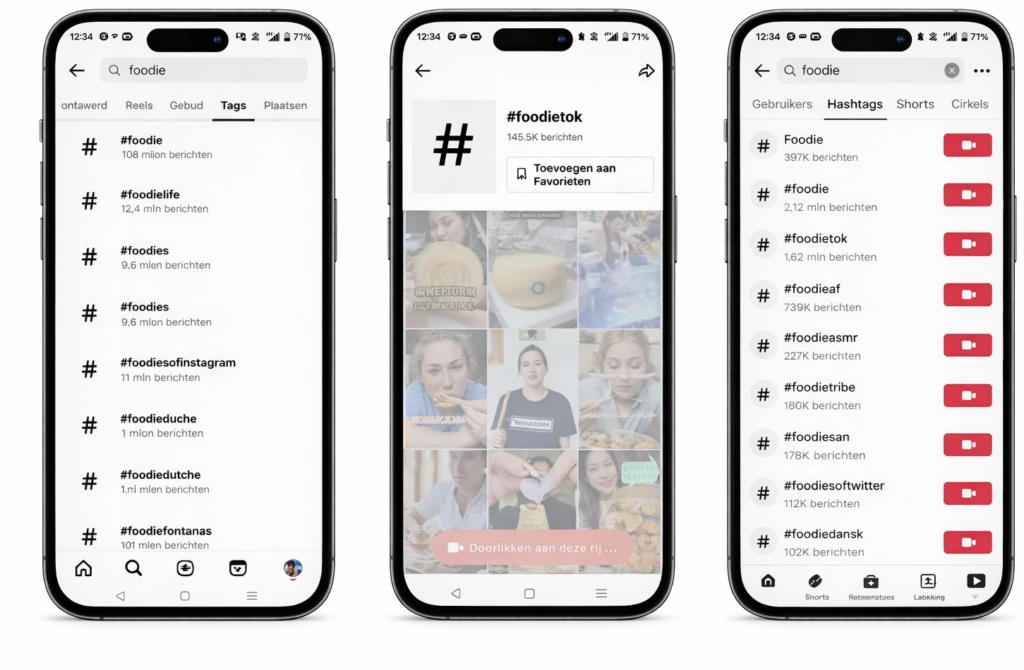
One caveat: hashtags are often used internationally, which makes this method less reliable when you specifically need local creators. Combining hashtags with location filters or local-language keywords helps narrow the results.
5. Use influencers’ social media channels
Once you have found one creator that fits your brand, use their profile to find more. On Instagram, the “Similar Accounts” section under a profile is a goldmine of creators in the same niche. You can also look at who they follow, who comments regularly on their posts, or who they collaborate with.
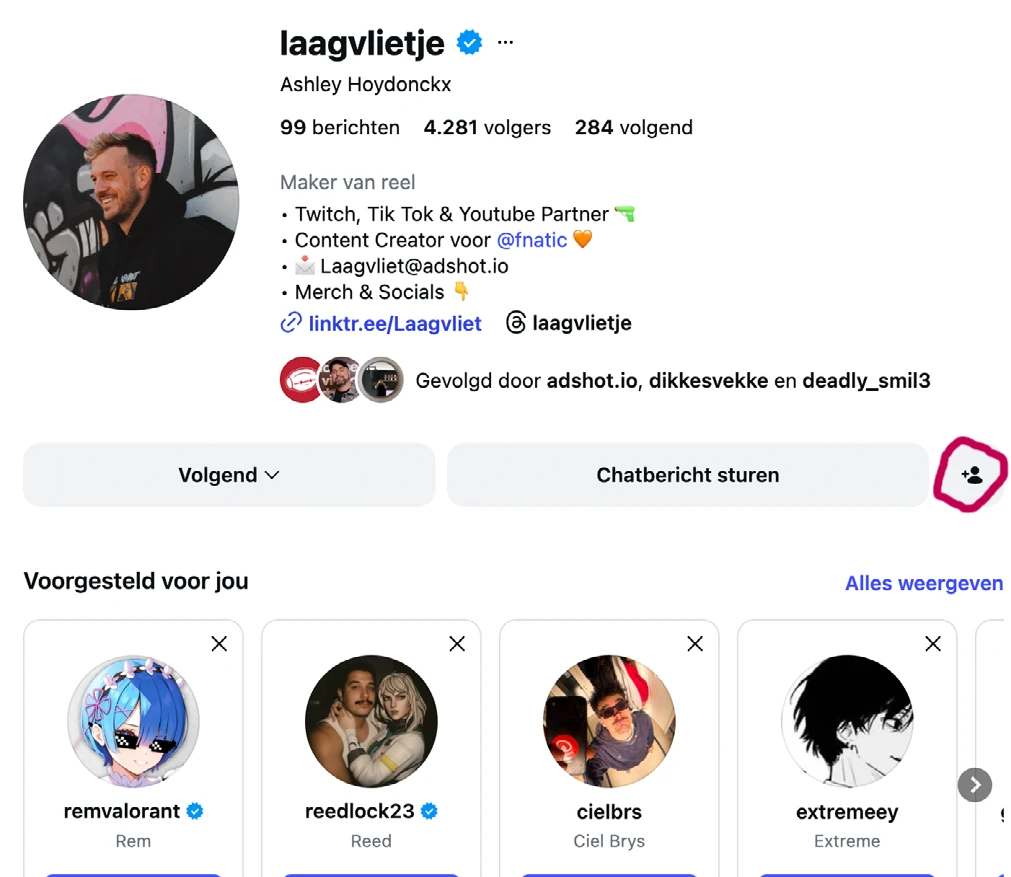
This method works well because creators in the same niche tend to share audience characteristics. If one fits your brand, the ones around them often will too.
6. Check the comments of other influencers
A simple but underused trick: scroll through the comments under posts of creators you already like. Influencers in the same niche often interact with each other in the comments, and these comments tend to get the most likes from their communities, which pushes them straight to the top of the comment section.
This makes it an efficient way to discover relevant creators without scrolling endlessly. The comments rank themselves: the more visible a creator is in another creator’s comment section, the more likely they sit in the same niche and engage with the same audience.
7. Check other brands’ relevant social media profiles
A method many brands forget: look at the social profiles of other (non-competing) brands that target a similar audience to yours.
On Instagram, check the “tagged posts” tab to see which creators are mentioning the brand. On TikTok, look at the content the brand has liked or reposted. This usually reveals the type of creators that brand prefers to work with, and can help you spot profiles that would be a strong fit for your own campaigns.
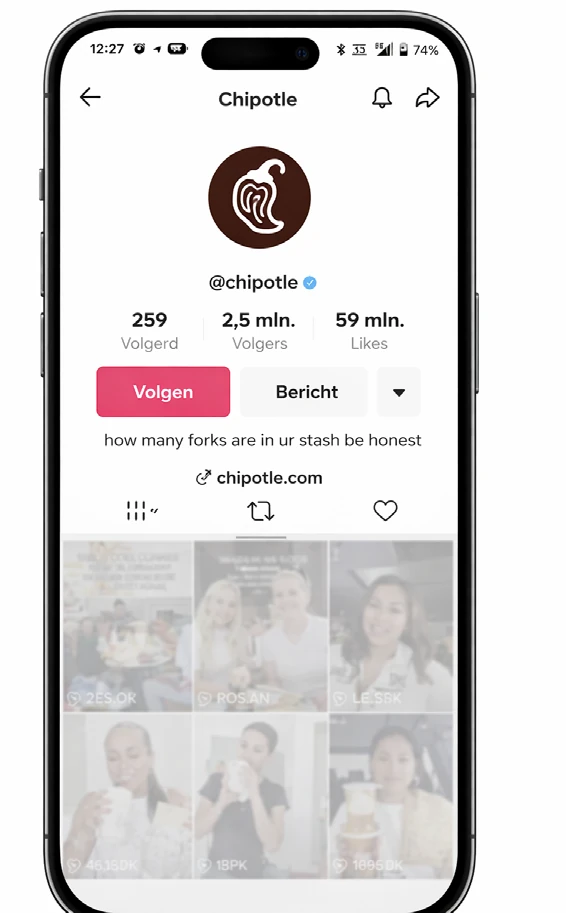
Creators who already engage with similar brands are often more open to working with yours, since they already create content in that space.
Frequently asked questions
How many influencers should I contact for one campaign?
Our common rule of thumb is to contact two to three times the number of creators you actually want to work with. Not everyone will be available, and not everyone will be a fit once you compare audience data and rates. For a campaign with five creators, reaching out to twelve to fifteen profiles is a realistic starting point.
How do I know if an influencer’s audience matches my target?
If you do not have access to a native creator marketplace or a discovery tool, simply ask the creator in your outreach message to share screenshots of their audience insights from Instagram, TikTok, or YouTube. Native platform data is more reliable than anything a third-party tool can estimate. While you are at it, ask why they think they are the ideal candidate for this campaign. Their answer often tells you more about audience fit than any data point.
Should I work with bigger or smaller creators?
Both can work, depending on your goal. Recent 2026 studies confirm that smaller creators consistently deliver higher engagement rates than larger ones. That said, we typically recommend a mix of profile tiers in a single campaign rather than picking one side. A mix gives you more influencers and more pieces of content to work with than you would have with only a few large profiles. The benefit comes after the campaign: with more data points across different creators, formats, and audiences, you can make sharper decisions for the next campaign about what worked and what did not. We covered this analysis approach in detail in our previous blog on KPIs and reporting.

