 Skip to content


How to leverage UGC for TikTok
October, 2024
Before discussing how to leverage User Generated Content (UGC), it is important to understand what UGC entails. UGC refers to content created by users, which can take various forms such as text, videos, images, reviews, and more. There are two main types of UGC: organic and paid.
organic vs paid
Organic User Generated Content is created by users without any compensation. This type of content often appears on social media platforms, forums, blogs, or other digital spaces, and is typically seen as more trustworthy and authentic because it reflects genuine user experiences.
Paid UGC, on the other hand, involves content created by users who receive some form of compensation, whether it be money, free products, discount codes, or other incentives. The key difference between paid and organic UGC is the existence of a formal agreement or partnership between the brand and the content creator. Paid UGC is usually shared on the brand's social media channels or website.
#TikTokMadeMeBuyIt
The hashtag "#TikTokMadeMeBuyIt" is widely recognized and has been used in over 8.8 million posts, amassing more than 77.8 billion views. This phenomenon demonstrates TikTok's significant influence on users' purchasing decisions. User Generated Content (UGC) plays a crucial role in this trend, offering the authenticity and creativity that viewers seek. Essentially, UGC acts as a digital form of word-of-mouth marketing.
To illustrate TikTok's impact, data from 2022 shows that 39% of TikTok users discovered a product or brand they were previously unaware of, and 47% reported purchasing a product because they saw it on the platform.
To get a bit technical, TikTok is an excellent platform for acquiring new customers due to its focus on video content. Video is an effective medium for engaging potential customers during the acquisition stage, which in psychology refers to the phase where stimuli and responses are processed by the brain. Psychologist Albert Mehrabian discovered that 93% of communication related to emotions and mannerisms is non-verbal. When applied to user-generated content (UGC) ads, this means that viewers pay more attention to the creator's body language (55%) and tone of voice (38%) rather than the actual words being spoken (7%). UGC integrates smoothly with TikTok's interface and facilitates more clear communication between users and brands. Notably, 15% of TikTok users have difficulty distinguishing between UGC ads and regular content.
UGC is an even playing field
User-generated content often showcases how people use products in real-world scenarios, making it an effective way to promote items without appearing overly commercial. 55% of millennials trust UGC more than content created by brands, and 84% have been influenced in their purchasing decisions by UGC. When making a purchase, people typically seek out opinions from others to gain better insights about a product. In fact, 92% of individuals consult people they know when choosing a product. UGC can satisfy this need for external opinions by providing insights through online reviews, social media posts, and hashtags. Additionally, 74% of consumers rely on social media to inform their purchasing decisions.
User Generated Content (UGC) allows smaller brands to compete with larger ones on a similar level. Paid UGC is generally more cost-effective than traditional influencer marketing, making it a viable option for smaller brands to attract attention and drive sales. Collaborating with smaller creators, such as micro or nano influencers, can be particularly advantageous. Although these influencers may have fewer followers, their audiences tend to be more targeted and engaged, resulting in more authentic content. This dynamic creates a mutually beneficial situation: the creator gains exposure and growth, while the brand, especially through organic UGC, can achieve a positive return on investment.
For those interested in launching a social media campaign, more detailed guidance can be found in our four-part blog series, "Influencer Marketing from Scratch to Finish." Start with step 1: Strategy HERE.
Different types of User Generated Content
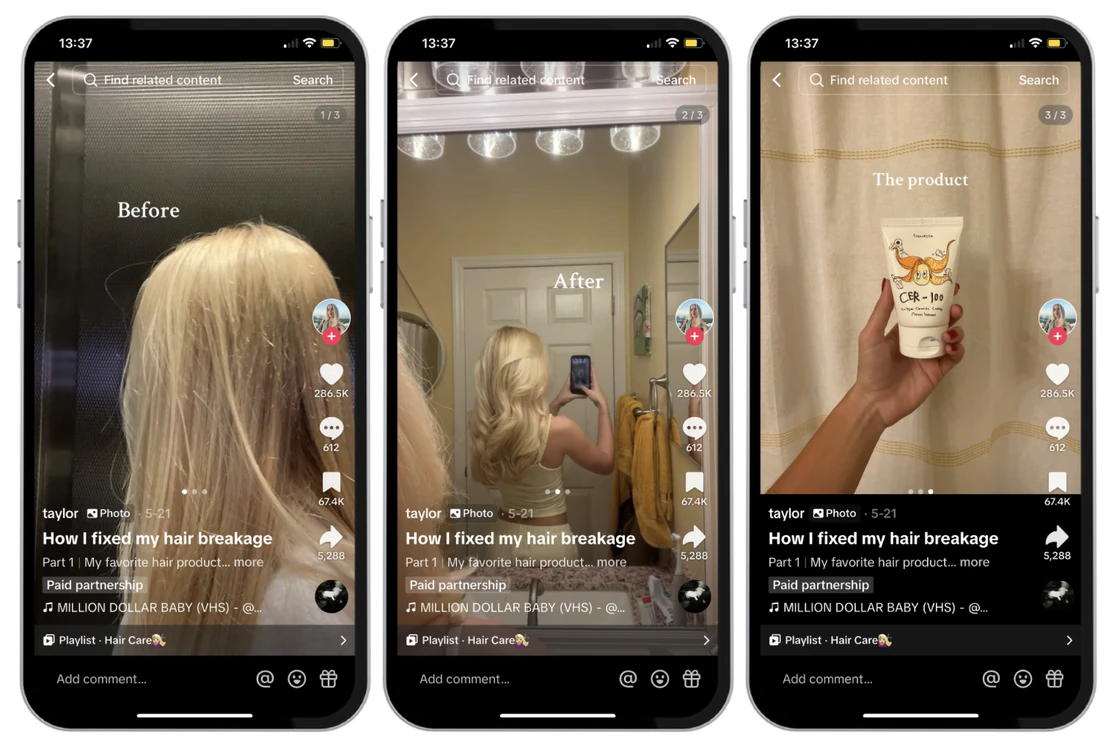
TikTok is known for its emphasis on authenticity, with consumers often trusting content from other users, which the platform showcases effectively. One particularly impactful type of content on TikTok is product reviews and demonstrations, where individuals share their genuine experiences with a product. A common format for this is "before and after" comparisons, such as displaying the effects before and after using a hair product.
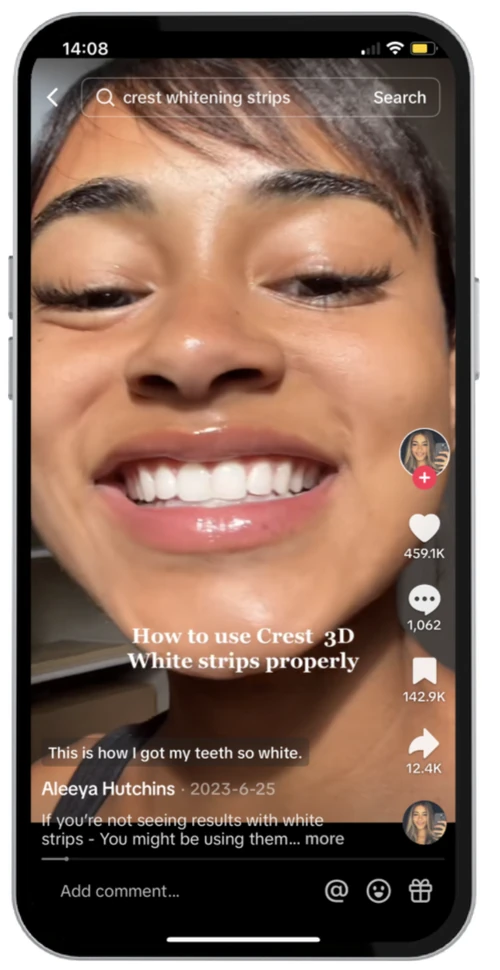
Another popular form of content on TikTok is tutorials, which have been a staple of online content and fit naturally into TikTok's format. In a tutorial, creators demonstrate how to use a particular product step-by-step, which not only educates viewers but also helps build trust and credibility for the brand.
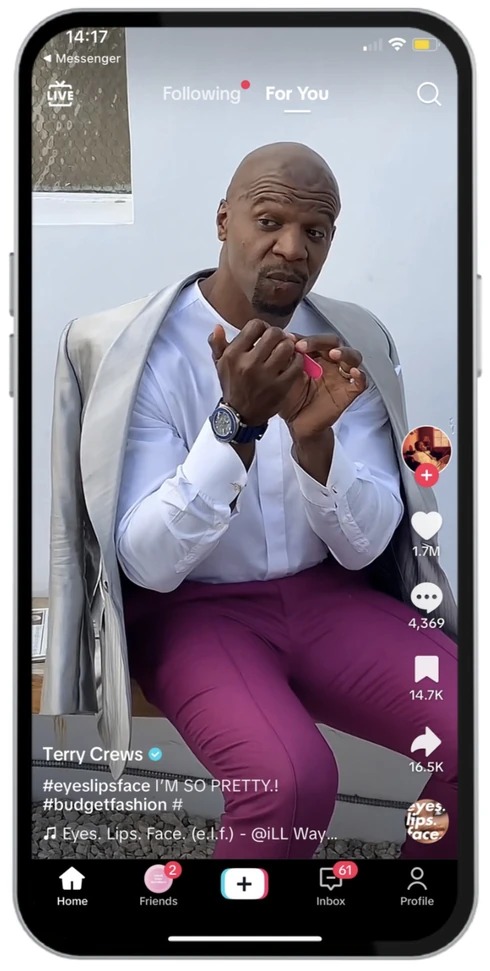
Challenges featuring specific hashtags are also an excellent way to increase brand exposure and boost engagement. By using a designated hashtag, users are encouraged to create content around a particular theme or activity. A notable example is the e.l.f. "EyesLipsFace" challenge. In this campaign, participants showcased their best makeup looks for a chance to win $250 worth of e.l.f. products. The hashtag "#EyesLipsFace" was fitting as it aligns with the brand's name. Additionally, e.l.f. partnered with TikTok to create an original sound for the challenge, which gained even more traction when celebrities participated, even if they weren't necessarily showcasing makeup looks.
For brands using TikTok, staying on top of trends is crucial. It helps capture the attention of consumers and keeps them engaged, encouraging users to create and share more User Generated Content (UGC) on the platform.
Another effective type of content on TikTok is tutorials. These have been popular for a long time and fit seamlessly into the TikTok format. In a tutorial, the creator provides a step-by-step demonstration of how to use a particular product. This approach not only educates viewers but also helps to build trust and credibility for the brand.
Challenges featuring a specific hashtag are an excellent strategy for increasing brand exposure and boosting engagement. By using a designated hashtag, users are encouraged to create content centered around a particular theme or activity. A notable example is the e.l.f. "EyesLipsFace" challenge. In this campaign, participants were invited to showcase their best makeup looks for a chance to win $250 worth of e.l.f. products. The hashtag "#EyesLipsFace" was particularly effective as it aligns with the brand's name. Additionally, e.l.f. collaborated with TikTok to create an original sound for the challenge, which helped the campaign gain further traction. The involvement of celebrities, even if they did not directly showcase their makeup looks, also contributed to the campaign's success.
When using TikTok as a brand, staying on top of trends is essential. This approach helps capture consumers' attention and keeps them engaged. By keeping up with the latest trends, brands can encourage users to create and share more User Generated Content (UGC) on the platform.
UGC enhances authenticity and engagement, making it a key asset for any brand. Embrace UGC to boost your marketing strategy and connect more deeply with your audience.

